
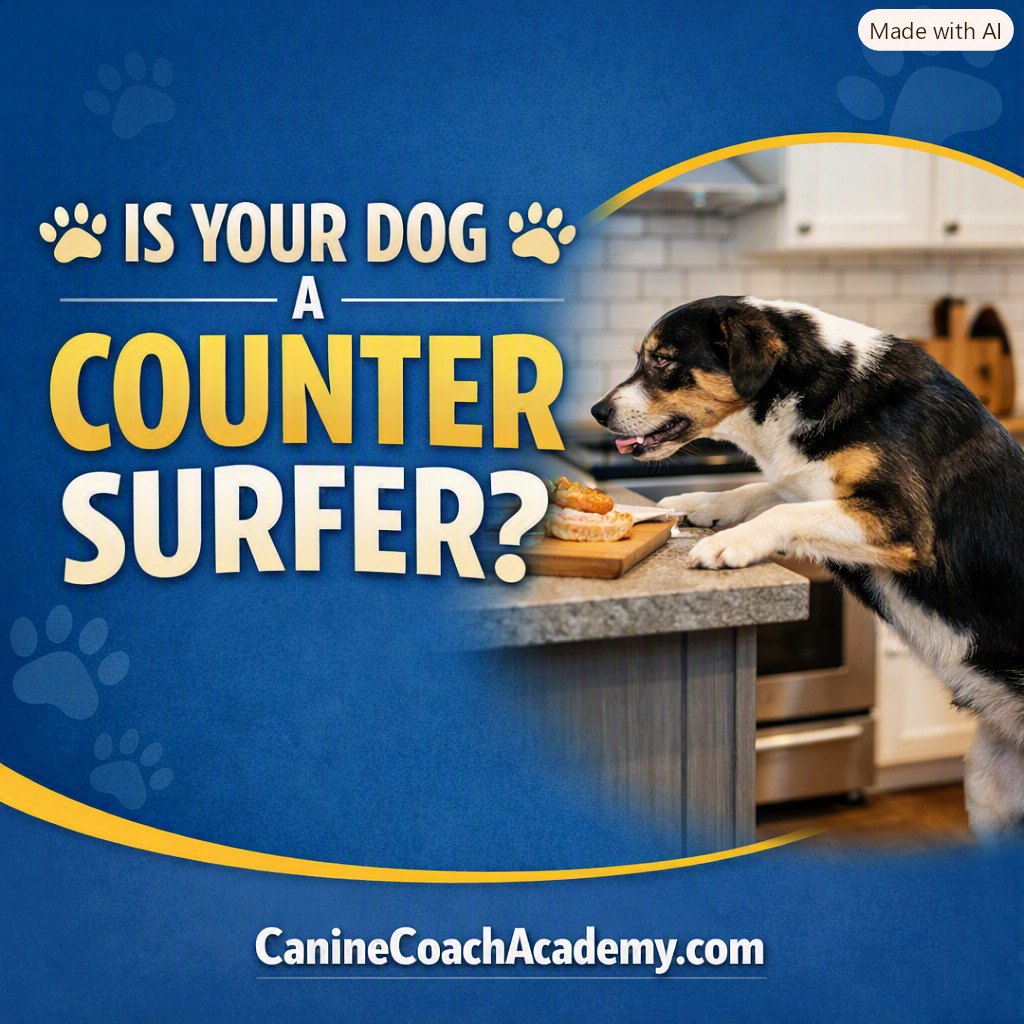
🐾 The Hidden Dangers of Counter Surfing: Why Dogs Do It and How to Stop It. If you’ve ever turned your back for two seconds only to find your dog proudly standing at the counter with a stolen sandwich, you’re not alone. Counter surfing — when dogs jump up to grab food or objects from kitchen counters — is one of the most common (and most frustrating) canine behaviors.
It’s funny until it isn’t — because what your dog grabs off the counter can send you straight to the emergency vet. This blog breaks down why dogs counter surf, the real risks involved, and the best ways to prevent it.
🍗 Why Dogs Counter Surf in the First Place Dogs are natural opportunists. If something smells good and is within reach, their instincts tell them to go for it. Height + curiosity = irresistible opportunity. A few common motivations include:
Food smells — especially meats, fats, and anything sugary
Learned rewards — if they’ve succeeded once, they’ll try again
Boredom — exploring the environment becomes entertainment
Height advantage — larger breeds can reach counters effortlessly
Human reinforcement — even yelling can feel like attention
Once a dog discovers that counters = treasure, the behavior becomes self‑reinforcing.
⚠️ The Serious Dangers of Counter Surfing Counter surfing isn’t just a nuisance — it can put your dog at risk in ways many owners don’t expect.
- Toxic Food Ingestion Dogs don’t know what’s safe. Common kitchen items that can be deadly include:
Grapes and raisins
Onions and garlic
Chocolate
Xylitol (found in sugar‑free gum and baked goods)
Alcohol
Certain spices and seasonings
A dog grabbing “just one cookie” can turn into an emergency vet visit.
- Choking Hazards Bones, skewers, toothpicks, plastic wrap, and packaging can all be swallowed during a frantic grab.
- Pan and Stove Injuries Dogs can:
Pull hot pans off the stove
Burn themselves on hot surfaces
Turn knobs accidentally
Cause kitchen fires
This is especially risky for tall breeds like Great Danes, German Shepherds, and Standard Poodles.
- Broken Glass and Sharp Objects If your dog knocks something off the counter — a glass dish, knife, or utensil — they can cut their paws or mouth.
- Gastrointestinal Blockages Swallowing non-food items (foil, plastic, napkins, packaging) can lead to dangerous blockages requiring surgery.
- Reinforced Bad Behavior Every successful grab teaches your dog that counter surfing works. The longer it continues, the harder it becomes to break the habit.
🛑 How to Prevent Counter Surfing Stopping counter surfing requires consistency, management, and training. Here’s what works:
- Remove the Temptation The simplest and most effective step:
Keep counters clear
Store food immediately
Use sealed containers
Don’t leave plates unattended
If nothing is available to steal, the behavior loses its reward.
- Block Access Physical management is your friend:
Use baby gates
Close kitchen doors
Crate or place your dog in another room during meal prep
This prevents the behavior while you work on training.
- Teach an Incompatible Behavior Train your dog to:
Go to a mat using the “Place” command.
Stay in a designated spot
Lie down during cooking or mealtimes
Reward heavily for staying put.
- Reward Calm Behavior Dogs repeat what gets reinforced. Praise and treat your dog when they don’t approach the counter.
- Avoid Punishment Yelling or scolding doesn’t teach your dog what to do — and can increase anxiety-driven behaviors. Focus on prevention and positive reinforcement instead.
- Consider Professional Training If counter surfing has become a long-term habit, a trainer can help you build a structured plan.
🏡 Final Thoughts Counter surfing may seem harmless or even humorous, but it carries real risks — from toxic foods to physical injuries. Counter surfing isn’t a sign of a bad dog — just a dog being a dog. With smart management and consistent training, you can keep your kitchen safe and your pup out of trouble.
Clear counters, controlled access, and positive reinforcement go a long way toward preventing dangerous kitchen adventures.

CanineCoachAcademy.com
