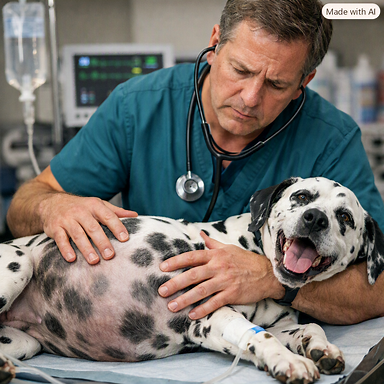
Understanding GDV (Bloat) in Large Dogs:
Gastric Dilatation‑Volvulus (GDV)—commonly known as bloat or a twisted stomach—is one of the most serious medical emergencies a dog can experience. It develops rapidly, progresses quickly, and requires immediate veterinary intervention. Large, deep‑chested breeds are especially at risk, making awareness essential for owners of Great Danes, German Shepherds, Standard Poodles, and similar breeds.
This guide explains what GDV is, identifies the factors associated with it, and outlines practical ways to reduce your dog’s risk.
🔍 What GDV Actually Is
GDV occurs in two dangerous stages:
- Gastric Dilatation (Stomach Expansion)
The stomach fills quickly with air, gas, or fluid, causing it to swell and stretch. This alone is painful and dangerous.
- Volvulus (Stomach Rotation)
The distended stomach can rotate or flip, sealing off both the entrance and exit. This rotation:
- Cuts off blood flow
- Traps gas and fluid
- Causes rapid shock
- Becomes fatal without emergency surgery
GDV is not a minor digestive issue—it is a life‑threatening emergency.
❄️ Myth Busting: Ice Water Does Not Cause GDV
A common internet myth claims that ice water or cold water can trigger bloat. Veterinary research shows this is false.
Water temperature does not cause GDV.
The real concern is how quickly and how much a dog drinks. Rapidly consuming a large volume of water—cold or warm—can distend the stomach, but ice itself is not a trigger.
⚠️ What Actually Triggers GDV
Several factors are associated with a higher risk of GDV:
- Rapid Eating or Drinking
Dogs that gulp large amounts of air, food, or water are at higher risk.
- Heavy Activity Immediately After Meals
Running or playing right after eating or drinking can increase stomach movement and instability.
- Breed Anatomy
Large, deep‑chested dogs have more room for the stomach to shift, increasing risk.
- Stress or Anxiety
Nervous dogs may swallow more air, especially during meals.
- Prior Episodes
A dog that has bloated before is significantly more likely to experience GDV again.
🚨 Warning Signs of GDV
GDV progresses rapidly, and recognizing the symptoms early can save your dog’s life.
Look for:
- Non‑productive retching (trying to vomit but nothing comes out)
- A swollen, tight, or rigid abdomen
- Excessive drooling
- Pacing, restlessness, or distress
- Rapid breathing or panting
- Weakness or collapse
If you notice any of these signs, contact the nearest emergency veterinary hospital and seek care immediately; do not wait to see whether the symptoms improve.
🛡️ How to Reduce Your Dog’s Risk
Although GDV cannot be completely prevented, you can significantly reduce your dog’s risk:
- Slow Down Eating and Drinking
Use slow‑feeder bowls, divide meals, or manage water intake after intense exercise.
- Avoid Vigorous Activity After Meals
Give your dog 1–2 hours of rest after eating or drinking heavily.
- Create Calm Mealtimes
Reduce stress to minimize air‑gulping.
- Know Your Breed’s Risk
Owners of deep‑chested dogs should be especially vigilant.
- Consider Prophylactic Gastropexy
Prophylactic gastropexy is a surgical procedure that secures the stomach in place to help prevent twisting and is often recommended for high-risk breeds.
🏥 GDV Is Always an Emergency
Once volvulus occurs, time is critical. Dogs require:
- Immediate stabilization
- Emergency surgery
- Intensive post‑operative care
With rapid treatment, many dogs recover well. Without it, GDV is fatal.
💬 Final Thoughts
GDV is one of the most serious conditions a dog owner can face, but understanding the recognized risk factors—and rejecting internet myths—helps you make informed, protective choices. Focus on slowing food consumption, managing water intake, maintaining calm mealtimes, and avoiding strenuous activity after meals. For large, deep‑chested breeds, awareness is one of the most powerful tools available to owners.
CanineCoachAcademy.com
