
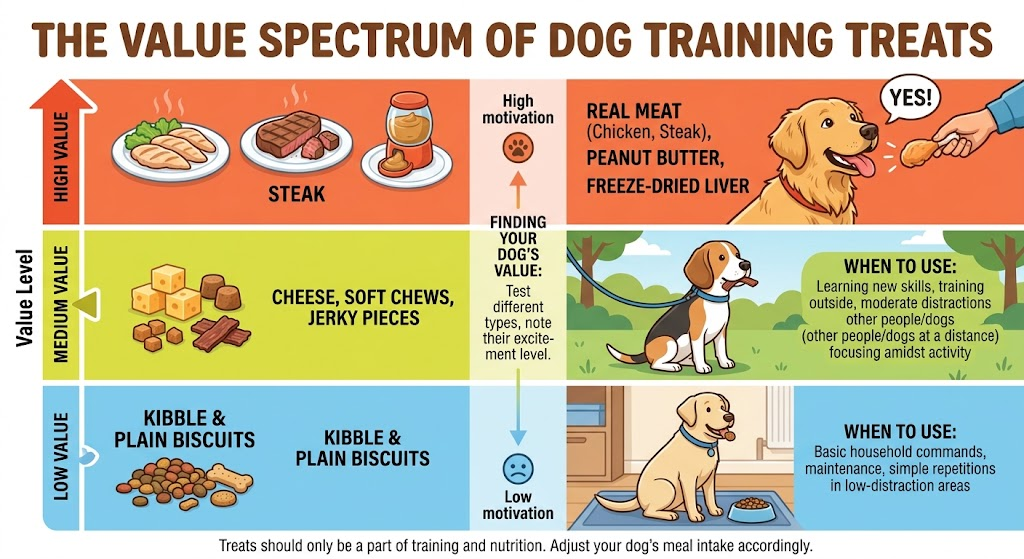
Treats are one of the most effective tools in dog training—but not all treats carry the same value. Understanding treat value helps you shape behavior more efficiently, improve focus, and build reliability in any environment.
In training, treats function as payment, and the value of that payment directly influences how motivated your dog feels. Below is a breakdown of high‑, medium‑, and low‑value treats, when to use each, and how treat value impacts training outcomes.
High‑Value Treats
High‑value treats are the most motivating rewards you can offer. These are typically soft, moist, and highly aromatic examples include chicken, cheese, hot dog pieces, or premium soft training treats.
When High‑Value Treats Are Most Effective
- Teaching brand‑new behaviors
- Working in challenging or distracting environments
- Counterconditioning fear, anxiety, or reactivity
- Reinforcing recalls
- Building engagement in new locations
Why High‑Value Treats Matter
These rewards cut through environmental distractions and help your dog stay focused. They’re ideal for precision work and emotionally sensitive training scenarios.
Medium‑Value Treats
Medium‑value treats are enjoyable but not overly exciting. These include crunchy biscuits, kibble mixed with toppers, or lower‑odor commercial treats.
Best Uses for Medium‑Value Treats
- Practicing behaviors your dog already understands
- Reinforcing manners in moderately distracting environments
- Building duration behaviors like sit‑stay, down‑stay, or place
- Routine training sessions at home
Why Medium‑Value Treats Work
They maintain motivation without overstimulation, making them perfect for reinforcing known skills and everyday training.
Low‑Value Treats
Low‑value treats are simple, everyday rewards—often kibble or dry biscuits your dog likes but doesn’t love.
When Low‑Value Treats Are Useful
- Reinforcing easy, well‑established behaviors
- Calm reinforcement throughout the day
- Training sessions where you want your dog relaxed
- Dogs who become overly excited by high‑value food
Why Low‑Value Treats Help
They support good habits without creating unnecessary excitement. They’re ideal for reinforcing polite behavior around the house or rewarding simple cues.
How Treat Value Shapes Training
Treat value is a strategic tool. Adjusting it intentionally can dramatically improve training results.
Increase Treat Value When Difficulty Increases
If the environment becomes more challenging, the reward must become more motivating. Example: A recall at home may only require kibble; at a busy park, it may require chicken.
Decrease Treat Value as Skills Become Reliable
Once your dog performs a behavior consistently, you can gradually shift from high‑value to medium‑value rewards. This builds reliability without creating dependency on premium treats.
Use Treat Value to Communicate Importance
High‑value treats signal, “This behavior is important.” Low‑value treats signal, “Nice job—keep it up.”
Avoid Overusing High‑Value Rewards
If everything is paid with chicken, nothing feels special. Reserve high‑value treats for moments that truly require them.
Choosing the Right Treat for the Right Moment
A simple guideline:
- High‑value: New skills, tough environments, emotional work
- Medium‑value: Practicing known skills, moderate distractions
- Low‑value: Maintenance, manners, calm reinforcement
Matching treat value to the challenge level makes training more effective and more enjoyable for both you and your dog.
Final Thoughts
Treats are powerful training tools when used intentionally. By understanding treat value and applying it strategically, you can improve your dog’s focus, confidence, and reliability across every stage of training.
Reminder! Your dog determines the value of a treat. Your dog may not like steak and really likes Kibble. It’s trial and error to determine what they like best.

CanineCoachAcademy.com
Pawsative Training starts at the Academy
