
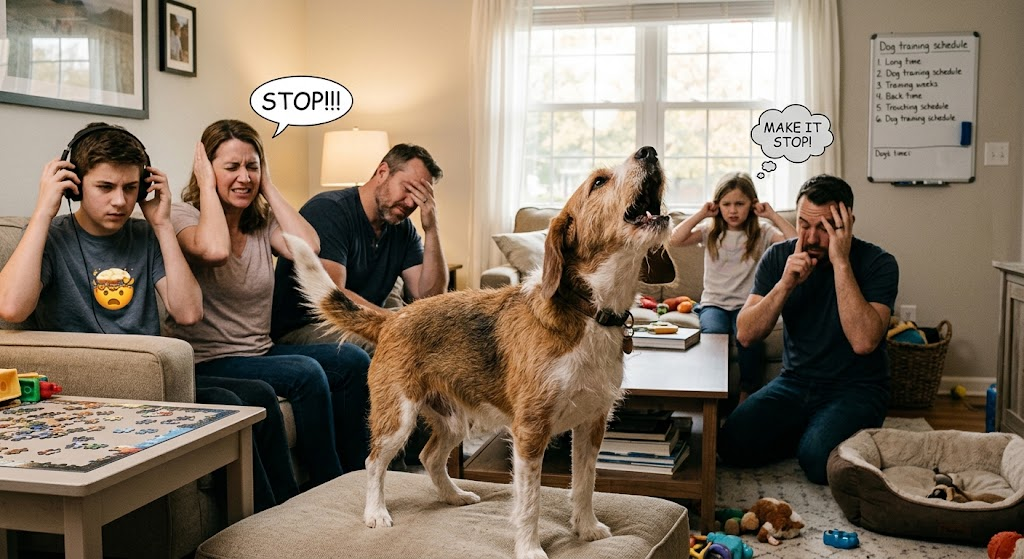
Constant barking can quickly turn a peaceful home into a high-stress environment. Teaching a reliable “quiet” command gives you a gentle, effective way to regain control without yelling.
Step 1: Identify the Root Cause Before training, observe what triggers your dog:
- Alert Barking: Short (10–30 seconds) response to real events, like a visitor arriving.
- Problem Barking: Long, repetitive episodes driven by boredom, fear, or window distractions. Keeping a 3–5 day trigger log helps isolate the main issues.
Step 2: Set Up for Success
- Low-Distraction Zone: Begin in a quiet room away from windows and street noise.
- High-Value Rewards: Use small, high-value treats like chicken or freeze-dried liver to keep motivation high.
Step 3: Step-by-Step Training
- Catch Natural Silence: Wait for a moment when your dog is naturally calm or pauses between barks.
- Mark & Reward: Say “Quiet” in a calm tone immediately during the pause, then deliver a high-value treat.
- Keep Sessions Short: Practice in 3–5 minute sessions, 3–4 times daily, to prevent fatigue.
Step 4: Real-Life Application & Maintenance
- Proofing: Gradually introduce real-world scenarios, such as controlled doorbell rehearsals or peak delivery hours.
- Troubleshooting: If progress stalls, step back to low-distraction environments, increase treat value, and ensure the dog gets enough physical exercise and mental enrichment.
Consistency across all household members is key to keeping your dog’s response reliable over time.

CanineCoachAcademy.com
Pawsative Training starts at the Academy
